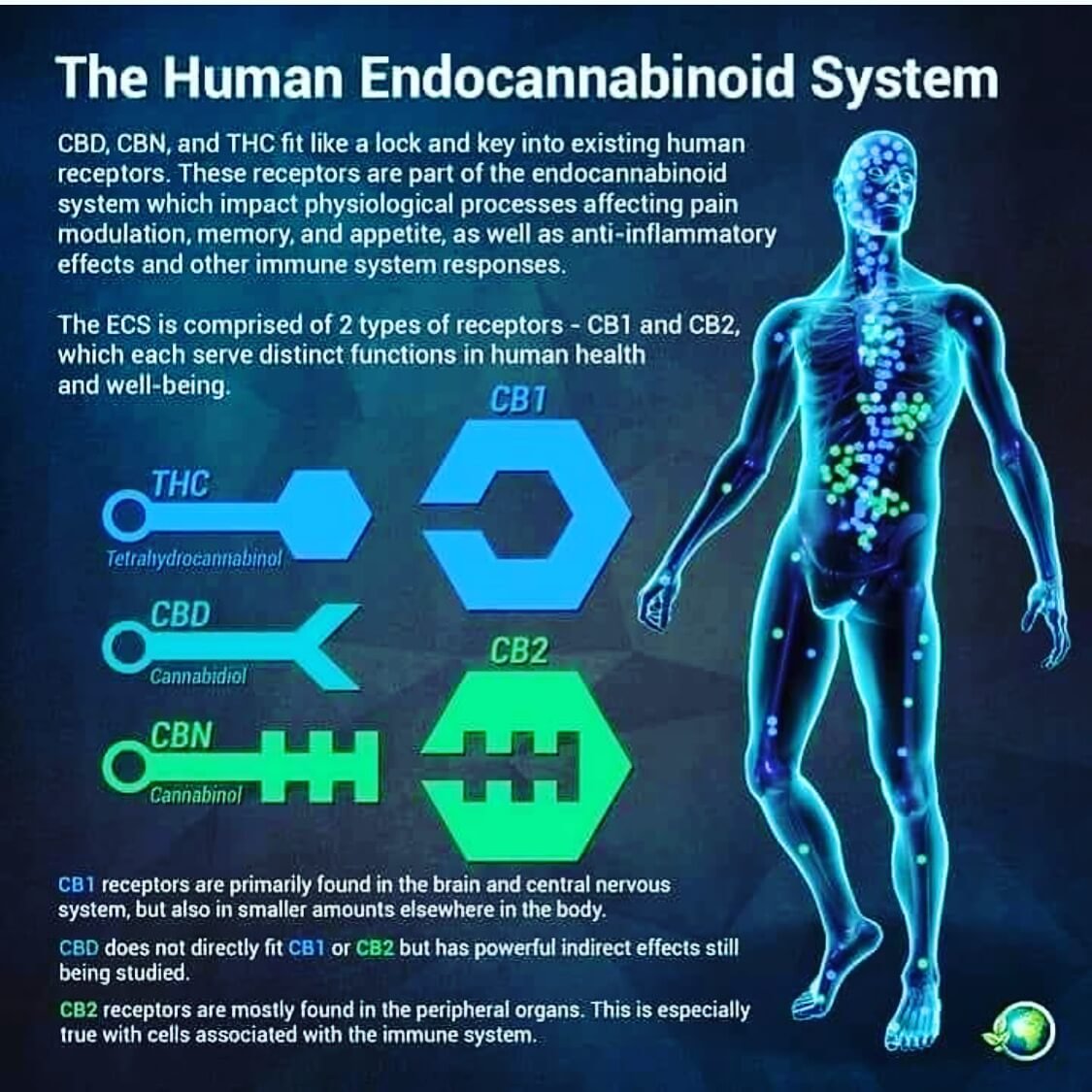

For decades, the story of cannabinoids in medicine was told as a simple narrative: cannabis contains compounds that affect the brain and body. But modern science has added a deeper twist. It turns out humans don’t just react to cannabis—they run an internal signaling network that cannabis molecules can plug into.
That network is the endocannabinoid system (ECS), and the discovery of this system is one of the reasons medical cannabis has become more than a folk remedy. Today, clinicians and researchers are increasingly asking not only whether cannabis helps, but how cannabis interacts with human biology—and how different cannabis preparations (including FECO) may matter because they deliver a broader chemical “fingerprint,” not just a single isolated compound.
This blog post covers two things:
- How the ECS was discovered in human biology (the essential scientific milestones).
- How FECO is being positioned in cutting-edge research and medical trials, including what “latest” really looks like for full-extract cannabis approaches.
1) The Discovery of the ECS: How the Body’s “Cannabis-Like” System Came to Light
Cannabis effects weren’t random—they had targets
The turning point for ECS discovery was understanding that cannabis’s primary psychoactive compound, THC, did not act like a vague sedative. Instead, it interacted with specific biological targets—cannabinoid receptors—in the body and brain. As receptor biology became clearer, scientists began to ask: if THC binds receptors, do humans naturally produce matching molecules?
That question matters because it reframes cannabis from being merely an external drug to being a molecular tool that reveals the body’s own communication system.
The “endocannabinoid” idea: the body produces its own cannabinoid-like messengers
Once researchers pursued endogenous ligands (molecules that naturally bind cannabinoid receptors), they identified endocannabinoids—including anandamide (AEA) and 2-AG—which are widely treated as foundational components of the ECS.
Anandamide is a particularly well-known example: it’s an ethanolamide derived from fatty acids and it can activate cannabinoid receptors. A broader review of endocannabinoids and metabolism describes how the identification of receptors and endogenous ligands launched the modern ECS concept. (pmc.ncbi.nlm.nih.gov)
The ECS isn’t one receptor—it’s a circuit
A crucial detail in ECS science is that it’s not just “CB1/CB2 receptors.” The system includes:
- Receptors (commonly described as CB1 and CB2)
- Endocannabinoid ligands (like AEA/anandamide and 2-AG)
- Enzymes that synthesize and degrade endocannabinoids (so signaling has timing and “on/off” control)
Mechanistically, reviews emphasize that once scientists mapped receptors and metabolic routes, they could describe ECS as an integrated system controlling signaling tone. (pmc.ncbi.nlm.nih.gov)
2) Why FECO Enters the Conversation (and Why “Full Extract” Matters)
FECO is not a single molecule
FECO typically refers to Full Extract Cannabis Oil—a “whole plant” oil intended to preserve a broad range of cannabis constituents (commonly cannabinoids plus other phytochemicals such as terpenes and minor cannabinoids). In other words, FECO is usually approached as a full-spectrum or “full extract” preparation, not an isolated compound product.
In the scientific literature, this aligns with a general idea: if the ECS is a biological signaling network responsive to cannabinoid receptor activation and modulation, then extracts with a broader chemistry may produce more complex pharmacology than isolated THC or isolated CBD.
Evidence is strengthening for extract standardization and profiling
One reason FECO research has been harder to translate historically is consistency. FECO “can” vary dramatically depending on starting material, extraction method, solvent, and processing.
A recent (GMP-focused) research paper discusses how processing can affect the cannabinoid/terpene profile of full-spectrum cannabis oil and aims toward more standardized medicinal use. That’s directly relevant because trial outcomes depend on what’s actually in the oil. (pmc.ncbi.nlm.nih.gov)
3) Cutting-Edge Research and Medical Trials: How Full-Extract Approaches Are Being Tested Now
When people ask, “What are the latest trials for ECS?” the honest answer is: the ECS field is moving in multiple directions at once. Some trials test purified compounds (CBD, THC, enzyme inhibitors), while others test whole extracts.
Since you asked specifically for FECO, the most useful framing is: How do full-extract / full-spectrum oils relate to ECS mechanisms and therapeutic goals?
A) Cannabinoids as ECS modulators in human targets
The ECS is regulated not only by receptors but by endocannabinoid metabolism. While FECO doesn’t work like a “single-target enzyme inhibitor,” it can still influence downstream ECS signaling by changing ligand availability at receptors and through interacting pathways.
For example, one enzyme of interest is FAAH (fatty acid amide hydrolase), which helps break down anandamide. In human translational research, FAAH inhibitors have been studied using PET imaging to demonstrate target engagement in brain tissue—showing that measurable ECS-related biology can be tested in humans. (pmc.ncbi.nlm.nih.gov)
This matters for FECO because the broader scientific direction is clear: modern cannabinoid medicine increasingly tries to measure mechanism (target engagement, biomarkers, pathway shifts), not only symptoms.
B) CBD and ECS biomarkers: a clue about endocannabinoid pathway engagement
Even when studies test CBD (rather than FECO specifically), they matter because they examine ECS-related outcomes in humans—like changes in anandamide levels.
A randomized clinical trial for cannabis use disorder reports CBD-related effects on clinical outcomes and includes biomarker-oriented thinking (anandamide measurement context appears in related materials describing the trial). (pmc.ncbi.nlm.nih.gov)
So while CBD isn’t the same as FECO, these kinds of trials show the “latest” approach: link cannabinoid-based interventions to measurable ECS-related biology.
C) Full-spectrum extract research is moving toward more rigorous characterization
A practical bottleneck in full-extract work is: “If two studies used two oils, are they comparable?” Recent work on profiling and standardization of full extract cannabis oil speaks directly to this modern trial reality. (pmc.ncbi.nlm.nih.gov)
That’s a major reason FECO is becoming a more legitimate clinical discussion point: the field is trying to turn “it’s full extract” into “it’s full extract with known composition and reproducible properties.”
D) The FECO evidence gap (and why you’ll see more “whole extract” than “FECO”)
One challenge with writing a FECO-specific blog post is that clinical trials may not label their product as “FECO,” even if it functions similarly as a full-extract preparation.
So the best “latest” approach is often:
- Use trials that test whole or full-spectrum cannabis oil preparations
- Focus on studies where composition is profiled or described
- Connect results to ECS-relevant mechanisms (receptors, endocannabinoid tone concepts, inflammatory signaling pathways)
Inflammation and immune modulation are major ECS-associated areas in contemporary cannabinoid literature, and modern reviews discuss these relationships across full extracts and their constituent classes. (frontiersin.org)
4) What FECO Trials Are Most Likely Trying to Achieve (Mechanism-Empathy, Not Hype)
Here are the most defensible “ECS-aligned” hypotheses that modern full-extract trials aim to test:
- Therapeutic signaling modulation across multiple pathways
- ECS regulates neuron signaling, inflammation tone, and stress-related processes. Full extracts may influence more than one receptor or pathway simultaneously.
- Better tolerability or broader symptom coverage
- Some patients report benefits with whole-plant oils that isolated cannabinoids don’t match. Clinically, that leads researchers to test full extracts in controlled settings.
- Consistency, dose-response, and measurable outcomes
- The newest direction isn’t only “does it help?” but “does it do so in a way consistent with ECS biology and reproducible product composition?”
That third point is where standardization papers and biomarker-inclined studies become central to the FECO narrative. (pmc.ncbi.nlm.nih.gov)
5) Safety and Scientific Rigor: The Reality Behind “Latest”
Even with strong ECS science, clinical outcomes for cannabinoid therapies can vary widely. Reasons include:
- Differences in formulation (oil composition, THC/CBD ratio, minor cannabinoids, terpenes)
- Dose and route differences
- Patient heterogeneity (diagnosis, co-medications, baseline ECS signaling assumptions)
- Measurement of outcomes (symptom scores vs biomarkers)
So for readers: FECO isn’t automatically “more natural and therefore more effective.” The scientific trend is to test full extracts with the same discipline you’d apply to a pharmaceutical: composition profiling, trial controls, and mechanism-informed endpoints.
Conclusion: The ECS Discovery Made FECO Scientifically Plausible—Now Trials Must Make It Clinically Proven
The discovery of the ECS turned cannabinoids from a single-drug story into a bodywide signaling story. Researchers learned humans have cannabinoid receptors, endogenous ligands, and metabolic control—meaning cannabis-derived compounds can plausibly interact with a real physiological system. (pmc.ncbi.nlm.nih.gov)
FECO, as a full-extract oil, sits at the intersection of that physiology and real-world medicine: patients want broad-spectrum extracts; researchers now want to know how those extracts interact with measurable biology and consistent chemistry.
The newest “cutting-edge” move in this space is not only testing more oils—it’s testing better-defined oils, with more mechanistic endpoints, and with more attention to standardization and pharmacology. (pmc.ncbi.nlm.nih.gov)