For thousands of years, people have used cannabis for its effects on mood, pain, and sleep. But for modern science, the real breakthrough wasn’t just that cannabis chemicals work—it was the realization that humans have an internal, “cannabis-like” chemical communication network of our own.
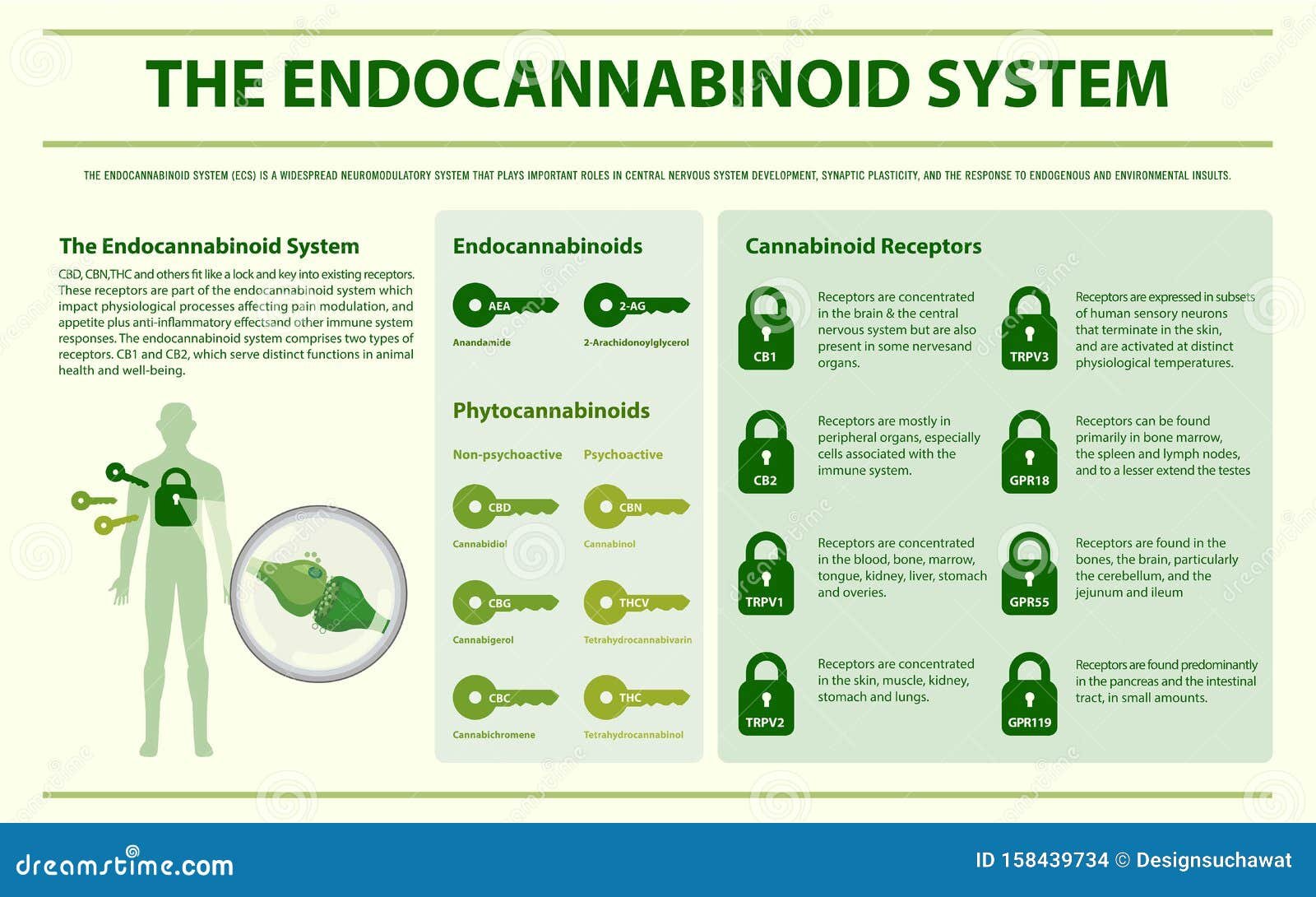
That network is the endocannabinoid system (ECS): a bodywide signaling system built around (1) cannabinoid receptors (especially CB1 and CB2), (2) endocannabinoids—the body’s own cannabinoid-like molecules (especially anandamide/AEA and 2-AG), and (3) enzymes that synthesize and break these signaling molecules down. What began as pharmacology became physiology, and then—more recently—precision medicine.
Below is the story of how scientists uncovered the ECS in humans and how the field is now using that knowledge in latest research directions and medical trials, including receptor modulators, enzyme inhibitors, and signaling-specific CB1 strategies.
The ECS Didn’t Appear Fully Formed—It Emerged in Steps
1) THC taught scientists where to look
The modern era of cannabinoid science traces back to the identification of THC and the understanding that its effects were mediated by specific biological targets (not just “general” drug effects). Reviews recount how systematic inquiry into cannabinoid mechanisms began after chemists isolated and clarified THC’s structure, leading researchers toward receptor binding and signaling pathways. (pmc.ncbi.nlm.nih.gov)
2) Cannabinoid receptors were the “landing pads”
A central turning point was demonstrating that tissues (including brain tissue) contain specific cannabinoid receptors. Classic work on receptor binding in the brain set the stage for asking: if receptors exist, where are the natural ligands? (pmc.ncbi.nlm.nih.gov)
3) The first endocannabinoid: anandamide (AEA)
With receptors in hand, researchers pursued the endogenous molecules that might activate them. In 1992, a landmark paper reported the isolation and structure of a brain constituent that binds to cannabinoid receptors—anandamide (AEA). (pubmed.ncbi.nlm.nih.gov)
This mattered for more than naming. Anandamide provided a plausible molecular explanation for how “endogenous cannabinoid signaling” could regulate brain function and behavior without requiring cannabis exposure.
4) The second major endocannabinoid: 2-AG
Soon after AEA, researchers identified 2-arachidonoylglycerol (2-AG) as another major endocannabinoid. Together, AEA and 2-AG became the foundation for what we now describe as the ECS’s core signaling logic. (nature.com)
5) The ECS became a system: receptors + ligands + metabolism
The modern ECS concept also depends on the enzymes that control endocannabinoid levels. Reviews emphasize that understanding the pathways that create and degrade AEA and 2-AG turned receptor pharmacology into a dynamic signaling framework. (frontiersin.org)
In other words, the ECS isn’t just “a receptor.” It’s a regulated chemical messaging circuit—where timing, location, metabolism, and cell type all shape signaling output.
What the ECS Does: A Bodywide Regulator of “Balance”
By the mid-to-late 1990s and onward, animal studies and human translational work began connecting ECS signaling to processes like:
- Neuronal communication and synaptic plasticity
- Pain and inflammation
- Stress reactivity and emotional learning
- Appetite and energy balance
- Immune modulation
- Metabolic regulation, including links between ECS tone and metabolic syndrome–related pathways
Large review articles frame the ECS as distributed across the brain and peripheral tissues, with signaling tuned by receptor distribution and endocannabinoid metabolism. (pmc.ncbi.nlm.nih.gov)
How “Discovery” Became “Drug Development”
Once scientists could measure ECS components and manipulate them pharmacologically, the next phase was clinical translation. Importantly, researchers learned that not all cannabinoid-related strategies are equal:
- Blocking CB1 can reduce some symptoms but may cause psychiatric side effects (a lesson learned from prior CB1 antagonist history).
- Activating cannabinoid receptors indiscriminately can create off-target effects.
- The most promising approaches increasingly aim for selectivity—cell-type, brain-penetrance, pathway specificity, or modulation of endocannabinoid metabolism rather than direct receptor agonism/antagonism.
Recent translational reviews discuss these targeted strategies and how they relate to psychiatric and other conditions. (pmc.ncbi.nlm.nih.gov)
Cutting-Edge Research & Medical Trials: Where ECS Science Is Going Now
Below are several major “front lines” in contemporary ECS research and clinical testing. Because the user asked for “latest,” I’m focusing on recent trial-era papers and contemporary clinical directions rather than only older pharmacology.
1) Signaling-specific CB1 strategies in cannabis use disorder
One of the most interesting modern themes is moving beyond “on/off CB1.” Instead, researchers are testing signaling-specific CB1 receptor inhibition, attempting to preserve therapeutic benefit while avoiding unwanted effects tied to full antagonism.
A Nature Medicine paper reports phase 1 and phase 2a randomized trials of a signaling-specific CB1 inhibition approach for cannabis use disorder. (nature.com)
Why it matters: It’s a modern ECS trial model—using mechanistic receptor biology to guide clinical design, rather than applying blanket receptor blockade.
2) Enzyme inhibition: targeting endocannabinoid metabolism (FAAH as a key node)
Another leading strategy is to raise endocannabinoid signaling in a controlled way by inhibiting enzymes that degrade endocannabinoids.
A classic example is FAAH (fatty acid amide hydrolase) inhibition, which increases AEA signaling. Imaging and translational work has explored FAAH inhibition in the human brain.
A study using a PET approach with a radioligand to evaluate PF-04457845 (a FAAH inhibitor) describes brain FAAH blockade and provides evidence that such compounds can robustly inhibit FAAH activity in humans at tested doses. (pmc.ncbi.nlm.nih.gov)
Where this fits clinically: FAAH inhibitors are being evaluated across indications where endocannabinoid tone may influence pain, anxiety/stress, and other neuropsychiatric processes. Recent reviews summarize the state of endocannabinoid-targeting therapeutics in psychiatric illnesses and how FAAH-related interventions fit into clinical candidate pipelines. (pmc.ncbi.nlm.nih.gov)
3) Measuring ECS effects in real human patients (biomarker-style thinking)
Modern trials increasingly examine whether interventions actually shift ECS-related signals in people—rather than relying only on symptom scores.
For example, Translational Psychiatry reported a randomized clinical trial examining how cannabidiol (CBD) affects anandamide levels in individuals with cannabis use disorder. (nature.com)
Why it matters: It’s part of a broader shift toward using ECS components (endocannabinoid levels, receptor/enzyme activity markers, or downstream signaling signatures) to connect “mechanism” to “clinical outcomes.”
4) CB2-focused directions and selectivity efforts
Because CB2 is often discussed as a more peripheral/immune-associated target (relative to CB1’s central psychoactivity), drug discovery has explored CB2 modulators.
Recent patent and medicinal chemistry landscape reviews describe the breadth of CB2 ligand strategies and the ongoing challenge of achieving proper selectivity and therapeutic windows. (sciencedirect.com)
Clinical implication: As scientists refine selectivity, the ECS drug-development strategy increasingly aims to reduce side effects while maintaining therapeutic efficacy.
5) Receptor inverse agonism for metabolic indications (and the “central vs peripheral” trade-off)
CB1 has roles in appetite and metabolism, but classic CB1 antagonist history warns that central CB1 blockade can trigger safety issues. That’s why developers pursue peripherally selective CB1 modulation.
For instance, a company announcement described results from a phase 2a trial in obesity evaluating monlunabant, a small-molecule CB1 inverse agonist, with details noting completion and next steps. (globenewswire.com)
Caveat: Press releases are not the same as full peer-reviewed efficacy/safety publications, but they are still part of the trial ecosystem—and they reflect where funding and development are focused.
The Big Picture: From a “Plant Drug Story” to Human Biology
The discovery of the ECS is one of those rare scientific arcs where each step unlocked the next:
- Cannabinoids bind receptors
- Receptors exist in the body
- Endogenous ligands exist (AEA, 2-AG)
- Metabolism controls the system
- Interventions can shift signaling in humans
- Trials can test whether those shifts improve disease
That progression is evident in the historical literature around anandamide identification and receptor/endocannabinoid work. (pubmed.ncbi.nlm.nih.gov)
Meanwhile, the newest clinical research is characterized by more precision:
- Signaling-specific receptor approaches (nature.com)
- Enzyme inhibition with human translational imaging (pmc.ncbi.nlm.nih.gov)
- Endocannabinoid-level measurement in real patients (nature.com)
- Selectivity-first medicinal chemistry (sciencedirect.com)
- Indication-driven dosing strategies (e.g., obesity pipelines) (globenewswire.com)
Conclusion: The ECS Is Becoming a Precision Target
What started as a mystery—how cannabis works—ended as a map of human signaling circuitry. The ECS now looks less like a “cannabis system” and more like a general-purpose biological regulation network that happens to be activated by cannabinoid-like molecules.
And crucially: the newest wave of research is aiming to translate that map into therapies that are mechanism-guided, biomarker-informed, and designed around safety rather than simply potency.
If you’d like, tell me the intended audience (general readers vs. clinicians vs. researchers) and whether you want the “latest trials” section to focus more on psychiatric, pain/inflammation, or metabolic indications—and I’ll tailor a second version with a tighter trial list and more indication-specific detail.